
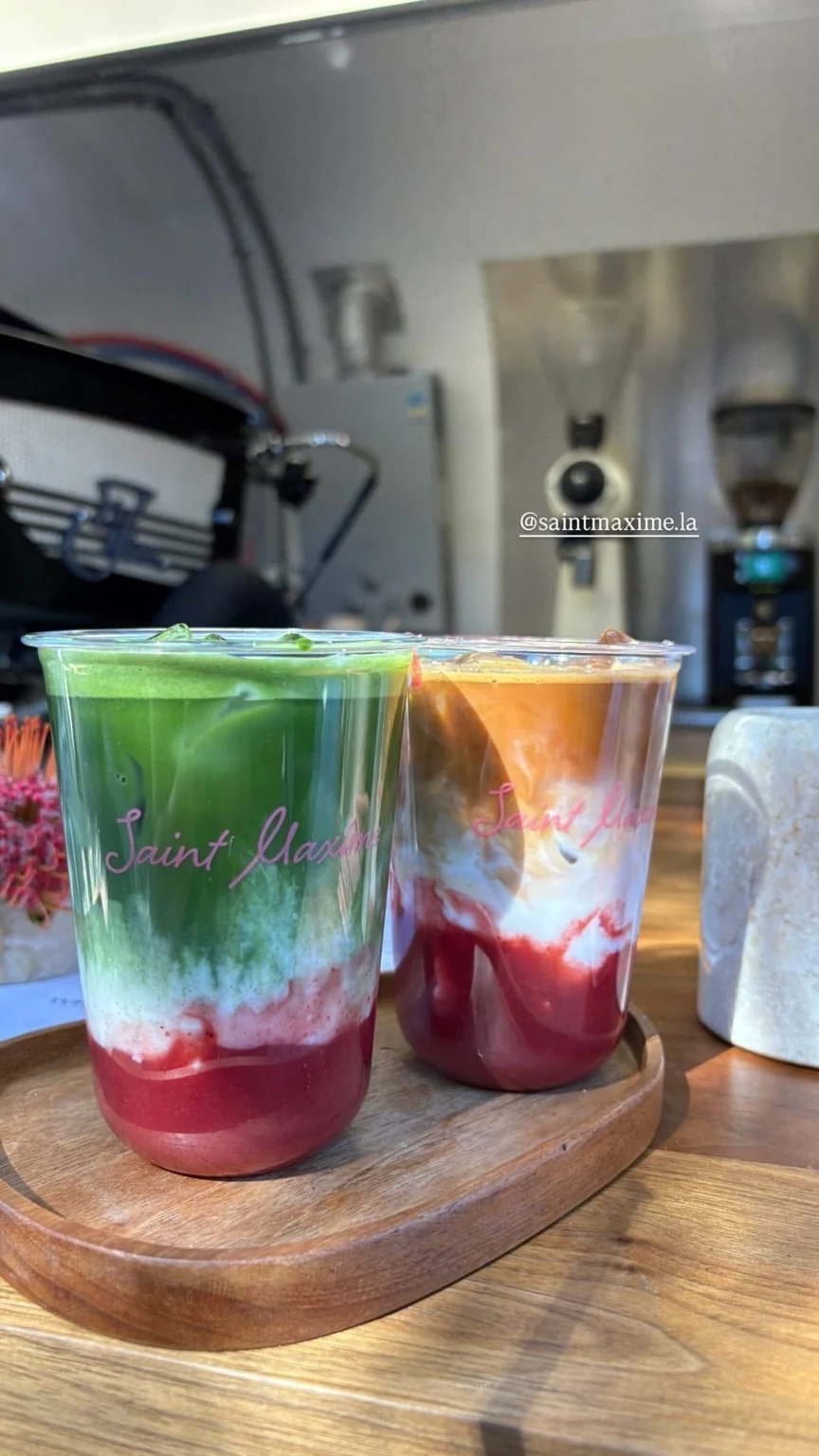
The short answer
The best milk for a matcha latte depends on what you care about most.
For taste, oat milk is the best overall choice. It is creamy, smooth, naturally sweet, and works especially well in iced matcha lattes.
If you drink dairy, whole milk is the best classic option. It gives matcha a round, creamy texture and works beautifully for hot matcha and latte art.
For the prettiest green color, almond milk, fat-free milk, and coconut milk usually look the best. They keep the matcha brighter and less yellow. But the best-looking milk is not always the best-tasting milk.
Quick picker: which milk should you choose?
If you only want the answer fast: choose oat milk for the best iced matcha latte taste, whole milk for the best dairy matcha latte, almond milk for the brightest green color, and water if you want to taste the matcha itself.
If you are ordering at Saint Maxime Coffee, oat milk is the safest first choice for most iced matcha drinks. Almond milk is better when you want the drink to look brighter and lighter. Whole milk is best when you want a classic dairy latte texture.
Best milk for iced matcha latte
For iced matcha latte, oat milk is the best taste answer because it makes the drink smooth, creamy, and naturally sweet without needing too much sugar.
For the brightest iced matcha look, almond milk usually wins. It keeps the green cleaner and creates a prettier layered drink when matcha is poured over milk.
If you want dairy, whole milk is the best dairy milk for iced matcha latte. It tastes round and classic, but it can make the green look softer than almond milk or fat-free milk.
Quick comparison table
| Milk | Best for | Taste | Color | Texture | My cafe note |
|---|---|---|---|---|---|
| Oat milk | Best overall taste | Smooth, naturally sweet | Slightly yellower | Creamy | My first pick for most iced matcha lattes. |
| Whole milk | Best dairy option | Round and classic | Slightly softer green | Creamy | Best dairy choice, especially hot. |
| Almond milk | Best visual | Lighter and clean | Bright green | Light | Great when the look matters. |
| Fat-free milk | Brightest color | Clean but thin | Very bright | Thin | Pretty color, less body. |
| Coconut milk | Pretty iced drinks | Can overpower matcha | Bright | Medium | Good visually, not my top taste pick. |
| Pistachio milk | Not usually classic matcha | Nutty and distracting | Muted | Medium | Usually not best for clean matcha flavor. |
| Water | Tasting matcha itself | Pure matcha flavor | True matcha color | No creaminess | Best way to judge the matcha quality. |
I Have Tried Almost Every Milk With Matcha
Milk changes everything in matcha.
It changes the color, texture, sweetness, bitterness, foam, and even how much of the matcha you actually taste.
After years of drinking matcha daily and making matcha drinks in a cafe setting, I do not think there is one perfect milk for every person. There is the best milk for taste, the best milk for color, the best milk for hot drinks, and the best milk if you want to taste the matcha itself.
That is why this guide is split by what you actually want in the cup.
Why Milk Choice Matters in Matcha
Matcha is delicate. A good matcha latte is not just green milk.
The milk changes the drink completely. Some milks make matcha creamier. Some make it brighter. Some make it taste sweeter. Some make it look beautiful but taste thin. Others can overpower the matcha completely.
The best milk for matcha depends on whether you want the best taste, the brightest green color, the creamiest texture, a dairy-free matcha latte, hot latte art, or the clean flavor of the matcha itself.
Best Overall Milk for Matcha: Oat Milk
Oat milk is the best overall milk for matcha latte.
It gives matcha a smooth, creamy body without making it too heavy. It also has a natural sweetness that works well with the grassy, soft, slightly bitter notes of matcha.
Oat milk is especially good for iced matcha. It blends well, tastes balanced, and gives the drink a soft texture. If someone asks for the safest non-dairy choice, oat milk is usually the answer.
The only downside is color. Oat milk can make matcha look slightly less bright and a little more yellow compared with almond milk or fat-free milk.
Still, if the goal is taste, oat milk wins.
Best Dairy Milk for Matcha: Whole Milk
If you drink dairy, whole milk is the best classic milk for matcha latte.
Whole milk gives matcha a creamy, rounded texture. It softens bitterness and makes the drink feel more like a traditional latte.
For hot matcha, whole milk is also the most flexible milk for steaming and latte art. It creates a smooth texture and gives the barista more control.
The downside is that whole milk can shift the color. The more fat in the milk, the more the matcha can move from bright green toward a softer yellow-green.
So whole milk tastes great, but it is not always the best choice if you want the brightest-looking matcha.
Best Milk for the Prettiest Matcha Color: Almond Milk
If the goal is a beautiful green matcha latte, almond milk is one of the best choices.
Almond milk can make matcha look brighter and cleaner. It can also create beautiful marbling in iced matcha, especially when the matcha is poured over the milk.
This is one reason almond milk can look amazing in photos. It helps the green color pop.
The flavor is also strong in a good way if you like a lighter, cleaner matcha. Almond milk does not make the drink as creamy as oat milk or whole milk, but it can make the matcha feel sharper and more vivid.
For looks, almond milk may be the best choice.
Best Milk for a Bright Green Look: Fat-Free Milk
Fat-free milk can keep matcha looking bright because it has very little fat.
Fat is one of the reasons matcha lattes can start looking more yellow. Whole milk, half and half, and cream can all push the color warmer. Fat-free milk keeps the drink visually cleaner.
The tradeoff is taste and texture. Fat-free milk can feel thinner and less creamy. It may look good, but it usually does not taste as satisfying as oat milk or whole milk.
Best for: color. Not best for: creamy texture.
Coconut Milk Looks Good, But Can Overpower Matcha
Coconut milk can look good in matcha because it keeps the color relatively bright. It can work visually, especially in iced drinks.
But flavor is the problem.
Coconut milk can overpower matcha very quickly. It brings its own strong taste, and instead of tasting the matcha clearly, you may taste mostly coconut.
That does not mean coconut milk is bad. It can work for a tropical-style matcha or a specific signature drink. But for a classic matcha latte, it is usually not the best choice.
Pistachio Milk Is Usually Not Best for Matcha
Pistachio milk sounds like it should be perfect with matcha, but in practice it can be one of the hardest milks to use well.
It can overpower the matcha, add a strange aftertaste, and make the matcha taste more bitter. Instead of making the drink smoother, it can make the flavor feel heavier and less clean.
For a pistachio-forward specialty drink, it might make sense. But for a classic matcha latte, pistachio milk is usually not the best choice.
At Saint Maxime Coffee, I would rank pistachio as one of the weakest options for matcha.
What About Half and Half or Cream?
Half and half and cream make matcha richer, but they also make it more yellow.
The more fat you add, the more the matcha color shifts away from bright green. A little cream can be beautiful in a cream top, but as the main base for a matcha latte, it can become too heavy.
Cream is better as a topping or texture element, not as the full milk base for a classic matcha latte.
What About 2% Milk?
2% milk sits in the middle.
It is lighter than whole milk, but creamier than fat-free milk. It can be a decent compromise if someone wants dairy but not the full richness of whole milk.
Still, it is not the top choice for either category. Whole milk tastes better for dairy matcha, and fat-free milk looks brighter if the goal is color.
2% is fine, but not the star.
What About Koji Milk?
Koji milk can be interesting, but it is not usually the cleanest choice for a classic matcha latte.
It can add a unique sweetness and fermented depth, which may work in a creative specialty drink. But if the goal is a clean, classic matcha flavor, koji milk can distract from the matcha itself.
For an everyday matcha latte, oat milk, whole milk, or almond milk are easier to recommend.
Best Milk for Hot Matcha Latte
For hot matcha, whole milk is the best option if you drink dairy.
It steams well, creates good texture, and works best for latte art. Hot matcha needs milk that can stretch, foam, and stay smooth.
Oat milk is the best non-dairy option for hot matcha. It steams better than almond milk and gives a creamier texture.
Almond milk can taste nice, but it is harder to steam well. It tends to be thinner and less stable for latte art.
A small cafe trick: a little almond milk blended with oat milk can give you some of almond’s brightness while still letting the oat milk steam better. Around 1 part almond to 10 parts oat can help keep the texture more workable while adding a cleaner matcha look.
Best Milk for Iced Matcha Latte
For iced matcha latte, oat milk is usually the best overall.
It tastes smooth, creamy, and balanced. It is the safest choice for most people who want a satisfying iced matcha.
Almond milk is the best iced option if you care about the visual. It creates a brighter green look and beautiful marbling when matcha is poured over milk.
So the answer is: oat milk for taste, almond milk for look, whole milk for dairy, fat-free milk for the lightest look, and coconut or pistachio as the most overpowering options.
Best Milk for Strawberry Matcha
For strawberry matcha, almond milk or oat milk works best.
Almond milk keeps the drink lighter and helps the matcha color stay bright against the strawberry. It can make the drink look more vivid and layered.
Oat milk is better if you want the drink to taste creamy and soft. It rounds out the strawberry and matcha together.
Choose almond if you want bright and pretty. Choose oat if you want creamy and smooth.
Best Milk for Banana Cream Top Matcha
For banana cream top matcha, oat milk is usually the best base.
The drink already has creaminess from the banana cream top, so the base milk should support the matcha without making everything too heavy.
Oat milk gives enough body without turning the drink into a dessert milkshake. Whole milk also works if someone wants dairy, but half and half or cream as the main base would usually be too rich.
Best base: oat milk. Best dairy base: whole milk. Avoid as full base: half and half or cream.
The Best Way to Taste Matcha Is With Water
Here is the most important point: the best way to taste good matcha is with water.
If the matcha is high quality, try it without milk at least once. You may notice that matcha can be naturally sweet, smooth, and complex by itself.
A matcha latte is delicious, but milk always changes the matcha. It softens it, covers some bitterness, and changes the texture. But it also hides some of the clean flavor.
Matcha with water is sometimes called matcha tea or matcha Americano on cafe menus. It is the simplest way to understand what the matcha actually tastes like.
If you want the purest matcha experience, try matcha with water before adding milk.
Final Ranking: Best Milk for Matcha Latte
- Best overall: oat milk
- Best dairy option: whole milk
- Best for hot latte art: whole milk
- Best non-dairy for hot matcha: oat milk
- Best for iced matcha taste: oat milk
- Best for iced matcha color: almond milk
- Best for bright green photos: almond milk, fat-free milk, or coconut milk
- Best light option: almond milk
- Best for pure matcha flavor: water
- Worst for classic matcha: pistachio milk
- Most overpowering: coconut milk and pistachio milk
- Most likely to make matcha yellow: half and half, cream, and higher-fat dairy
Bottom Line
If you want the best-tasting matcha latte, choose oat milk.
If you drink dairy and want a classic creamy matcha latte, choose whole milk.
If you want the prettiest green matcha, choose almond milk, fat-free milk, or coconut milk.
If you want the cleanest matcha flavor, skip the milk and try matcha with water.
At Saint Maxime Coffee in Venice Beach, oat milk is our favorite overall matcha pairing. Whole milk is the best dairy choice, almond milk is the prettiest in the cup, and water is the best way to taste the matcha itself.
FAQ
What milk is best for matcha latte?
Oat milk is usually the best overall milk for matcha latte because it is creamy, smooth, and naturally sweet. If you drink dairy, whole milk is the best classic choice.
What milk makes matcha look the greenest?
Almond milk, fat-free milk, and coconut milk usually keep matcha looking the brightest. Higher-fat milks like whole milk, half and half, and cream can make matcha look more yellow.
Is oat milk good with matcha?
Yes. Oat milk is one of the best milks for matcha. It makes the drink creamy and smooth without overpowering the matcha too much.
Is almond milk good with matcha?
Yes. Almond milk is great if you want a brighter matcha color and beautiful marbling in iced matcha. It is lighter than oat milk and not as creamy, but it can make the matcha look very clean and vivid.
Is whole milk good for matcha latte?
Yes. Whole milk is the best dairy milk for matcha latte. It is creamy, smooth, and works especially well for hot matcha and latte art.
Is coconut milk good with matcha?
Coconut milk can look good with matcha, but it can overpower the flavor. It is better for tropical-style matcha drinks than for a classic matcha latte.
Is pistachio milk good with matcha?
Pistachio milk is usually not the best choice for a classic matcha latte. It can overpower the matcha, add bitterness, and leave a strong aftertaste.
What is the best non-dairy milk for matcha?
Oat milk is the best overall non-dairy milk for matcha. Almond milk is best if you want a lighter drink and a brighter green color.
What is the best milk for iced matcha?
Oat milk is best for iced matcha taste. Almond milk is best for iced matcha appearance because it keeps the color brighter and creates beautiful marbling.
What is the best milk for hot matcha?
Whole milk is best for hot matcha if you drink dairy. Oat milk is the best non-dairy option because it steams better than almond milk and gives a smoother texture.
Is matcha better with milk or water?
For a latte, matcha is great with oat milk or whole milk. But if you want to taste the matcha itself, water is best. Good matcha can taste naturally sweet and smooth without any milk.
Why does my matcha latte look yellow?
Matcha can look more yellow when it is mixed with higher-fat milk. Whole milk, half and half, and cream can soften the green color and make the drink look warmer.
What milk should I avoid with matcha?
For a classic matcha latte, pistachio milk and coconut milk can be difficult because they can overpower the matcha. Pistachio milk can also make matcha taste more bitter.